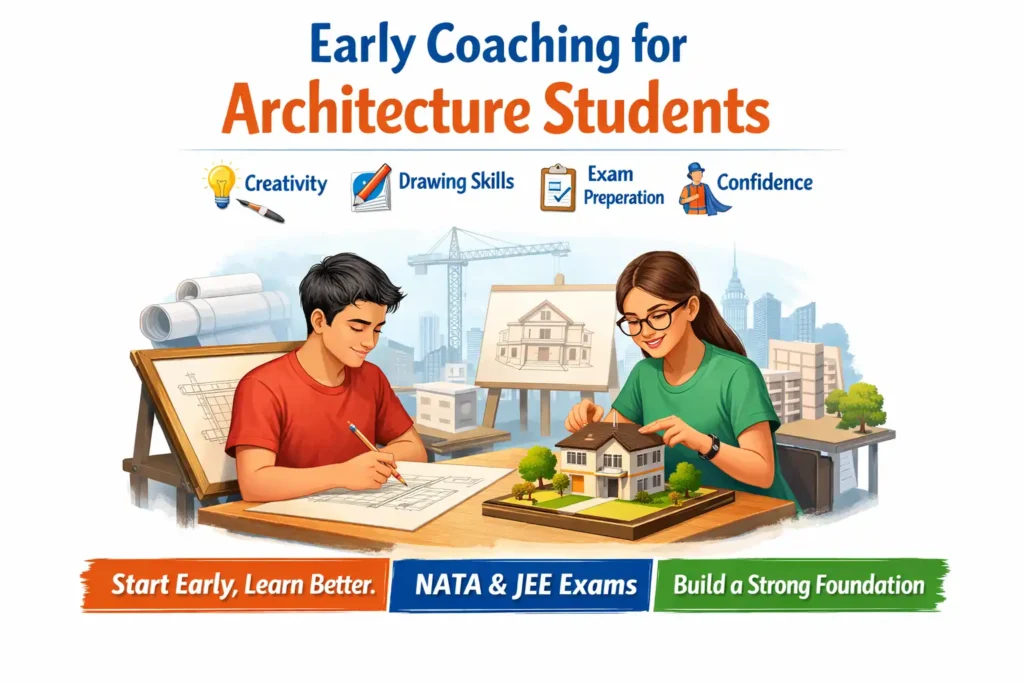
Architecture is an exciting field where creativity meets science and technology. Students who dream of becoming architects need more than good marks. They need imagination, drawing skills, problem-solving ability, and confidence. Many students start learning these things only after joining architecture college. Early coaching for architecture students helps build creativity, confidence, and design thinking skills from a young age, making the journey into architecture smoother and less stressful.
Early coaching means learning basic architecture skills while studying in school, especially from Class 8th or 9th onwards. This early start helps students understand architecture better and prepares them for future challenges.
In this article, we will explain in simple words why early coaching is important for architecture students, how it helps in studies, entrance exams, and future careers, and why starting early can make learning easier and more enjoyable.
What Is Architecture and Why Is It Different?
Architecture is not like regular subjects such as history or maths. It is a mix of:
- Creative thinking
- Drawing and design
- Science and mathematics
- Problem solving
- Planning real spaces like houses, schools, and cities
Architecture students do not just write answers; they design ideas. They make drawings, models, and presentations. This is why many students feel confused or stressed in the beginning.
Early coaching helps students understand how architects think and work, even before they join college.
How Early Coaching Helps Architecture Students
1. Helps Students Understand Architecture Early
Many students choose architecture without fully knowing what it involves. Early coaching introduces students to:
- What architects do
- How buildings are designed
- How creativity and logic work together
This early understanding helps students decide confidently if architecture is the right career for them.
2. Builds Design Thinking Skills
Design thinking means finding smart and creative solutions to problems. Early coaching teaches students how to:
- Observe things carefully
- Think of different ideas
- Improve designs step by step
These skills are useful not only in architecture but also in daily life. Students who learn design thinking early become better thinkers and planners.
3. Improves Drawing and Sketching Skills
Drawing is very important in architecture. Many students struggle because they have never practiced freehand drawing before college.
Early coaching helps students learn:
- Basic sketching
- Drawing shapes and buildings
- Using pencil lines correctly
When students practice drawing from an early age, they feel more confident and comfortable later.
Advantage in Architecture Entrance Exams
4. Better Preparation for Architecture Entrance Exams
Entrance exams like NATA and JEE Paper 2 test skills that are not taught in schools, such as:
- Drawing
- Visual thinking
- Logical reasoning
Early coaching gives students enough time to practice these skills slowly and properly. This makes exam preparation easier and more effective.
5. Less Stress and More Confidence
Students who start preparing late often feel pressure and fear. Early coaching removes this problem.
Because students are already familiar with exam patterns, they feel:
- Less nervous
- More confident
- Better prepared
Confidence plays a big role in performing well in exams.
Strong Start in Architecture College
6. Smooth Transition into First Year of Architecture
The first year of architecture college can be challenging. Students suddenly face:
- Long studio hours
- Many assignments
- Design juries and presentations
Students with early coaching already know the basics, so they adjust faster and perform better.
7. Better Understanding of Plans and Drawings
Architecture students must understand:
- Floor plans
- Sections
- Elevations
Early coaching helps students learn these concepts slowly, making college studies easier and less confusing. Early coaching for architecture students focuses on developing drawing skills, problem-solving ability, and design thinking, which are not usually taught in regular school education.
Better Communication and Presentation Skills
8. Learning How to Explain Ideas Clearly
Architects must explain their designs to teachers, clients, and teams. Early coaching helps students:
- Speak confidently
- Explain their ideas clearly
- Use drawings and diagrams to communicate
These skills are very helpful during presentations and juries.
9. Learning to Accept Feedback Positively
In architecture, feedback is very common. Teachers and juries give suggestions to improve designs.
Early coaching teaches students that:
- Feedback helps learning
- Mistakes are part of growth
- Improvement is more important than perfection
This mindset makes students stronger and more confident.
Time Management and Discipline
10. Learning How to Manage Time
Architecture students often have many tasks at the same time. Early coaching teaches students:
- How to plan work
- How to meet deadlines
- How to avoid last-minute stress
Good time management helps students perform better without feeling tired or stressed.
11. Developing Good Study Habits Early
Early coaching builds discipline and consistency. Students learn to work regularly instead of rushing at the end. This habit helps throughout college and career.
With Early Coaching for Architecture Students, preparation for entrance exams like NATA and JEE Paper 2 becomes easier because students are already familiar with drawing and visual thinking concepts.
Exposure to the Architecture World
12. Learning About Different Career Options in Architecture
Architecture is not limited to building design. Early coaching introduces students to fields like:
- Interior design
- Landscape design
- Urban planning
- Sustainable architecture
This helps students discover their interests early and plan their future better.
13. Basic Introduction to Architecture Tools
Early coaching may also introduce simple tools like:
- Model making
- Basic computer design concepts
- Portfolio preparation
This early exposure makes advanced learning easier later.
Portfolio and Career Benefits
14. Early Portfolio Development
A portfolio is a collection of a student’s best work. It is important for:
- College admissions
- Internships
- Jobs
Early coaching allows students to build a portfolio step by step instead of rushing later.
15. Better Opportunities in the Future
Students with strong basics often get:
- Better internships
- Good mentors
- More learning opportunities
This gives them an advantage in both studies and professional life.
Common Myths About Early Coaching
Some people think early coaching puts pressure on students. But the truth is:
- Early coaching reduces pressure
- Learning becomes easier
- Students enjoy the process
Good coaching supports creativity instead of limiting it.
Why Early Coaching Is Important for School Students
For Class 8th and 9th students, early coaching helps by:
- Building confidence
- Improving creativity
- Making career goals clear
Students get enough time to explore architecture without stress.
Early Coaching Makes Learning Easier and Smarter
Early coaching gives architecture students a strong foundation. It helps them learn important skills slowly and clearly. From entrance exams to college life and future careers, students who start early always stay one step ahead. Early Coaching for Architecture Students creates a strong base for entrance exams, college life, and future careers, making learning more confident and enjoyable.
Architecture is a journey that needs patience, creativity, and planning. Early coaching does not rush students-it prepares them wisely.For students who dream of becoming architects, starting early is the smartest step forward.