Choosing a design path after NID can feel exciting and confusing at the same time. Many students reach this stage with one big question in mind: which NID specialization is best for me? It is a valid question because the right choice can shape your learning, portfolio, job options, and long-term career growth. The truth is, there is no single best specialization after NID for everyone. What works well for one student may not feel right for another. Some students enjoy solving real-world problems through products. Some love visual storytelling, branding, and digital design. Others feel more connected to fashion, textiles, animation, or space design. That is why this NID specialization guide is not about pushing one option as the winner. It is about helping you choose the right specialization after NID based on your interest, strengths, and career goals.
If you are feeling stuck, do not worry. Many students feel the same way. The good news is that once you ask the right questions and understand your own design style, the decision becomes much easier.
What Does Specialization After NID Really Mean?
Specialization after NID simply means choosing the design field you want to go deeper into. During your design journey, you may explore different kinds of creative work. But specialization is the stage where you move toward one area with more focus and clarity.
This choice matters because different specializations lead to different types of projects, industries, and job roles. Your specialization affects the kind of portfolio you build and the direction your career takes in the future.
What are the main specialization options students usually explore?
The exact options can vary, but students usually think about areas like:
| Specialization Area | Focus Area | Common Career Direction |
| Product / Industrial Design | Physical products, usability, function | Product designer, industrial designer |
| Communication Design | Branding, graphics, visuals, storytelling | Graphic designer, brand designer |
| Animation / Film / Video | Motion, storytelling, visual narratives | Animator, visual storyteller |
| Textile / Fashion / Lifestyle | Fabric, clothing, patterns, lifestyle products | Fashion designer, textile designer |
| UI/UX Related Paths | Digital experience, interfaces, user flow | UI designer, UX designer |
Each field has its own work style, output, and career path. So before asking which specialization is best in NID, it is better to ask which one fits your way of thinking and creating.
Why Is Choosing the Right NID Specialization So Important?
Your specialization is not just an academic choice. It affects:
- the kind of work you do every day
- the industries you can enter
- the projects you enjoy building
- the career opportunities you can explore
- the growth you may have in the future
A good match can make your learning feel meaningful. A poor match can leave you feeling disconnected, even if the field looks popular from outside.
Why Do Many Students Feel Confused About Choosing the Right Specialization After NID?
Many students think they should know the answer immediately. But confusion is normal. Design is a wide field, and many specializations look interesting at the same time.
One reason for this confusion is that students often enjoy more than one thing. You may like sketching, visual storytelling, problem-solving, branding, and digital interfaces all together. In that case, choosing one path can feel difficult.
Another reason is outside pressure. Students often hear advice from friends, teachers, family members, and social media. Some people say to choose the field with better job opportunities. Others say to follow only passion. Both ideas sound useful, but the real answer is usually somewhere in between.
Why Interest Alone Is Not Always Enough
Interest matters a lot, but interest alone should not decide everything. For example, you may like watching animation films, but that does not always mean you will enjoy the long process of frame-by-frame creative work. In the same way, you may admire product design without actually enjoying research, prototyping, and user-based thinking.
That is why students should not choose a path only because it looks attractive from outside.
Why Career Scope and Skills Both Matter
A better approach is to combine three things:
- what you enjoy
- what you are good at
- where you can grow professionally
This balance helps you choose a specialization that feels both exciting and practical.
How to Choose the Right Specialization After NID Based on Your Interests and Strengths
If you are asking how to choose specialization after NID, start with self-awareness. A good specialization should feel exciting, but it should also match the way you think and work. Some students enjoy logic, systems, and problem solving. Others enjoy visuals, storytelling, expression, and emotional communication.
How to Identify Your Strongest Design Skills
Look back at your projects and ask yourself:
- Do you enjoy solving functional problems?
- Are you stronger in visual communication and layout?
- Do you enjoy storytelling through motion and images?
- Are you naturally drawn to materials, textiles, or garments?
- Do you prefer digital work or physical making?
Your past projects can reveal patterns. The work that feels natural to you often points toward the right direction.
How to Understand What Type of Creative Work You Enjoy Most
Different design fields demand different kinds of thinking. Product design often involves usability, structure, and real-life problem-solving. Communication design usually focuses on message, visuals, branding, and audience connection. Fashion and textile design involve material sense, form, styling, and trends. Animation and film design depend on story, movement, timing, and visual emotion.
Try to notice not just what you can do, but what you enjoy doing for long hours without feeling forced.
How Your Portfolio Can Help You Choose the Right Design Field
Your portfolio is one of the best clues. Look at it honestly. Which kind of work appears again and again? Which projects feel more complete, more original, and more confident?
Sometimes your best specialization is already visible in your work, even before you fully realize it.
Which NID Specialization Is Best for Different Career Goals?
Students often search which NID specialization is best or best specialization after NID for jobs. The better question is: best for what goal?
Different goals need different design paths.
Which Specialization Is Best for Product and Industrial Design Careers?
If you enjoy research, function, usability, prototyping, and solving practical problems, product or industrial design may suit you well. This path is strong for students who like understanding how people interact with objects and systems.
It can lead to careers in:
- consumer product design
- furniture and lifestyle design
- mobility and industrial systems
- user-centered innovation
- physical and digital product strategy
Which Specialization Is Best for Communication, Graphic, and UI UX Careers?
If you enjoy visuals, branding, layout, digital interfaces, storytelling, and audience connection, communication design can be a strong option. This field is wide and flexible, which is why many students see it as a good NID specialization with good career scope.
It can open paths in:
- graphic design
- branding
- social media creative work
- visual identity design
- UI UX design
- content and digital experience design
Which Specialization Is Best for Fashion, Textile, and Lifestyle Design Careers?
If you are interested in materials, surface exploration, clothing, patterns, culture, and lifestyle products, fashion or textile-based specializations may feel more natural.
This can lead to work in:
- fashion design
- textile development
- apparel branding
- craft-based design
- lifestyle product design
Which Specialization Is Best for Animation, Film, and Visual Storytelling Careers?
Students who enjoy motion, storyboarding, characters, film language, and emotional storytelling may feel more connected to animation or film-related design.
This path can lead to:
- animation studios
- visual storytelling
- motion graphics
- film design
- content production
- entertainment design
Which NID Specialization Has the Best Career Scope in the Future?
This is one of the most searched questions: which NID specialization has better scope? The smarter way to answer it is not by naming one field only, but by understanding market direction and flexibility.
Fields connected to digital experiences, branding, user interfaces, communication systems, and problem-solving often offer broad career options. At the same time, product, fashion, textile, and storytelling-based fields also continue to grow when backed by strong skill and portfolio quality.
Which Design Fields Are Growing Faster?
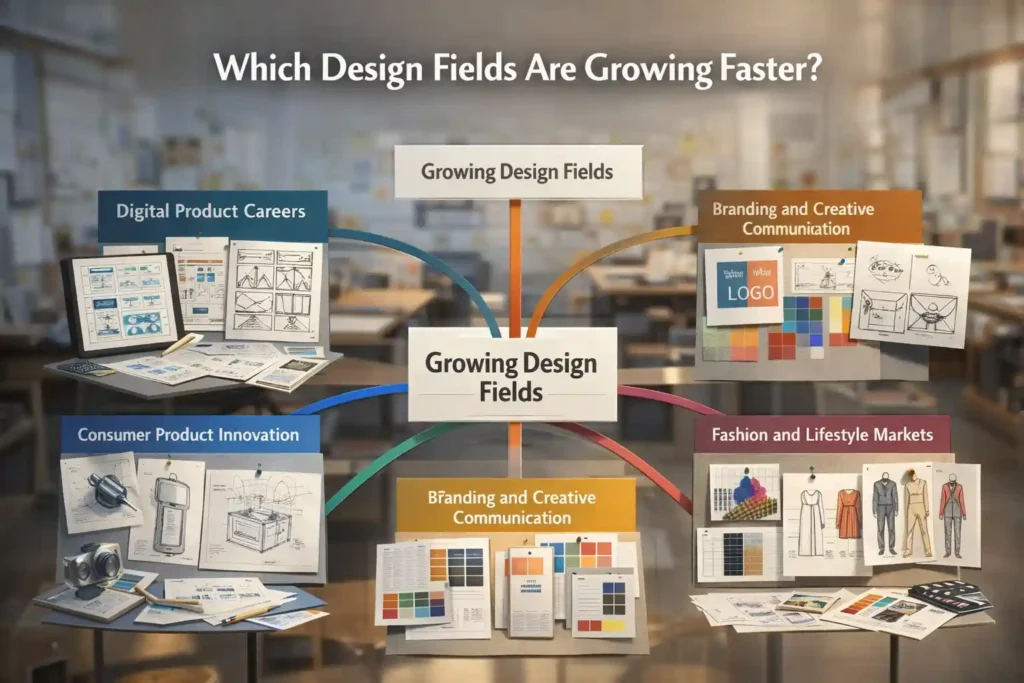
In general, students see strong movement in areas connected to:
| Career Goal | Specializations Often Considered Useful |
| Digital product careers | Communication, UI/UX, interaction-related design |
| Consumer product innovation | Product / industrial design |
| Branding and creative communication | Communication design |
| Fashion and lifestyle markets | Textile / fashion-related design |
| Storytelling and media work | Animation / film / motion design |
The future scope of NID specializations becomes stronger when your skills are updated and your work is relevant. So instead of asking only which field is in demand, ask which field matches your strengths and still has room for growth.
Which Specializations Offer Better Long-Term Flexibility?
Usually, fields that let you work across industries can offer better flexibility. Communication design and product-related design often give wider movement across sectors. But long-term success still depends more on your ability, learning attitude, and portfolio than the name of the specialization alone.
What Questions Should You Ask Yourself Before Choosing a Specialization After NID?
Before making a final decision, pause and ask yourself some honest questions.
What Kind of Projects Do I Enjoy Most?
Do you enjoy building systems, shaping products, telling stories, styling materials, or creating digital experiences? The answer matters more than outside opinions.
What Kind of Job Role Do I See Myself In?
Think about your ideal workday. Do you want to work in studios, brands, startups, digital teams, fashion spaces, or content-driven environments? The answer can guide your decision.
Do I Want Creative Freedom, Technical Work, or Market-Focused Design?
Some students enjoy open creative expression. Others enjoy structured solving. Some want consumer-facing work, while others prefer research or concept development. Your comfort zone matters.
| Question | If Your Answer Is Mostly “Yes” | You May Explore |
| Do I enjoy solving practical use problems? | Function and usability matter to you | Product Design |
| Do I love visuals, layouts, and branding? | You think through images and communication | Communication Design |
| Do I enjoy digital screens and user journeys? | You like interface thinking | UI/UX paths |
| Do I love fabric, style, and material expression? | You enjoy lifestyle-based creation | Textile / Fashion |
| Do I enjoy story, motion, and scenes? | You like narrative and movement | Animation / Film |
Who Should Choose Which Specialization After NID?
This is where clarity becomes practical.
Who Should Choose Product Design?
Choose product design if you enjoy:
- solving functional problems
- thinking about users and usability
- building concepts into real forms
- working with research and prototypes
Who Should Choose Communication Design?
Choose communication design if you enjoy:
- visual storytelling
- branding and identity
- graphics and layouts
- digital interfaces and audience engagement
Who Should Choose Fashion or Textile Design?
Choose these paths if you enjoy:
- fabrics, materials, color, and surface
- clothing, lifestyle, and trends
- craft-based or style-based design work
Who Should Choose Animation or Film Design?
Choose this path if you enjoy:
- storytelling through motion
- visuals with emotion
- script, sequence, and cinematic expression
What Mistakes Should You Avoid When Choosing the Best Specialization After NID?
Students often make avoidable mistakes while trying to decide quickly.
Choosing Only Based on Trends
A field may look popular today, but if it does not match your natural interest and strengths, it may not feel right in the long run.
Choosing Only Based on Friends or Family Advice
Advice can help, but your specialization should match your own design identity, not someone else’s opinion.
Ignoring Your Real Skills and Work Style
If your work style does not fit the field, you may struggle even if the career scope looks attractive. Be honest with yourself.
When Is the Right Time to Decide Your Specialization After NID?
You do not always need to rush. It is okay to explore before making a strong choice. In fact, exploring can prevent wrong decisions.
Should You Decide Early or Explore First?
A little early clarity is useful, but forced certainty is not. Give yourself time to observe your interests through projects, feedback, internships, and practice.
How Internships, Projects, and Mentors Can Help
Real work experience can reveal more than theory. Internships, mentors, alumni conversations, and project work can help you understand where you truly fit.
How to Make the Final Decision and Choose the Right Specialization After NID
If you still feel confused, use a simple method.
First, list the top two or three specializations you are considering. Then compare them based on interest, skill, work style, and future direction. After that, review your portfolio and see where your strongest work belongs. Finally, talk to mentors or seniors who know the reality of those fields.
Do not try to find the perfect choice on paper alone. The goal is to find the most suitable choice for your present self and future growth.
A good specialization should feel like a field where:
- you enjoy the process
- you can improve your strengths
- you can build a strong portfolio
- you can see real career possibilities
That is how you choose the right specialization after NID with more confidence.
Choose the Right NID Specialization with Expert Guidance in Bhopal and Indore
Choosing the right specialization after NID can feel confusing when every field looks exciting in a different way. Some students feel drawn to product design, some connect more with communication design, and others see their future in fashion, textile, animation, or visual storytelling. At this stage, the best decision comes from proper guidance, self-understanding, and expert support.
If you are looking for trusted NID coaching in Bhopal or NID coaching in Indore, Design Aspirants can help you move forward with more clarity and confidence. With the right mentoring, students can understand their strengths, explore different design paths, and choose a specialization that matches their interests, skills, and long-term career goals.
At Design Aspirants, the focus is not only on exam preparation but also on helping students build the right design direction for their future. For students in Bhopal and Indore, this kind of expert guidance can make the journey easier, more focused, and more meaningful. Whether you are still exploring your options or already confused between two design fields, the right support can help you make a smarter and more confident choice.
FAQs About Choosing the Right Specialization After NID
Which specialization is best after NID?
There is no one best option for everyone. The right specialization depends on your interests, skills, work style, and career goals.
How do I know which NID specialization is right for me?
Look at the projects you enjoy most, your strongest design skills, and the type of work you want to do in the future.
Which NID specialization has the best scope?
Specializations linked to communication, digital design, product thinking, and user experience often offer broad scope, but success depends on skill and portfolio quality.
Can I choose a specialization based only on interest?
Interest is important, but it should be balanced with skills, career direction, and the kind of work you can see yourself doing long term.
What should I do if I am confused between two NID specializations?
Compare both based on project type, work style, portfolio fit, and career path. Talking to mentors and exploring real projects can help a lot.
Conclusion
Choosing the right specialization after NID is not about finding the most hyped field. It is about finding the field that fits your creative strengths, interests, and future goals. The best decision usually comes when you stop asking what is popular and start asking what is truly right for you.
So if you are wondering which NID specialization is best, shift the question slightly. Ask yourself which design field helps you do your best work, enjoy the process, and grow with confidence. That is where your real answer begins.
In the end, the best specialization after NID is not the one others say is best. It is the one that helps you do meaningful work, build a strong career, and stay creatively satisfied for the long run.