
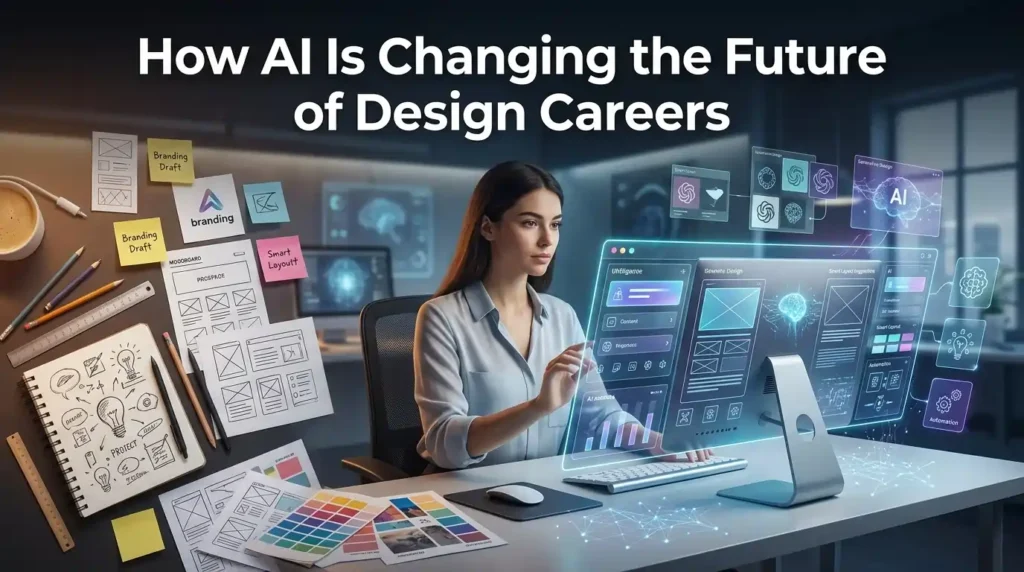
Artificial intelligence is rapidly transforming many industries, and the design world is no exception. From graphic design to UI/UX and product design, AI tools are helping creatives work faster, explore new ideas, and improve productivity. But this change also raises important questions for designers and students entering the field. How will AI affect the future of design careers? Will automation replace designers, or will it create new opportunities? Understanding the role of AI in design careers can help creatives prepare for the future while continuing to develop their unique human creativity.
What Is AI in Design Careers and Why Is It Important Today?
Artificial intelligence in design refers to the use of machine learning and automation tools to assist designers in creating visuals, layouts, and creative concepts. Instead of replacing designers, AI works as a creative assistant that speeds up repetitive tasks and provides new design possibilities.
Today, many designers already use AI Design Tools for tasks such as generating images, creating color palettes, or improving design layouts. These tools analyze large amounts of visual data and help designers make better decisions during the creative process.
The growing popularity of AI-powered design tools is driven by several factors:
- Faster design production
- Data-driven design insights
- Improved efficiency in workflows
- Access to new creative ideas
For example, a designer creating marketing visuals may use AI to generate initial concepts and then refine them manually. This collaboration between human creativity and AI technology is shaping the Future of Design Careers.
As businesses increasingly rely on digital content, designers who understand AI in the Creative Industry will have a strong advantage in the job market.
Also Read – How Mock Tests Improve NIFT Rank Dramatically in 2026
How AI Is Changing the Future of Design Careers
AI is not simply another design trend. It represents a major shift in how creative work is produced and delivered. In the past, designers relied only on manual tools and personal experience. Today, AI systems can analyze user behavior, suggest layouts, and even generate design variations.
The impact of AI on designers can be seen in several ways.
First, AI reduces repetitive tasks. Activities such as resizing images, generating layout suggestions, or optimizing designs for different platforms can now be automated.
Second, AI allows designers to experiment with ideas more quickly. Instead of spending hours creating different versions of a concept, designers can generate multiple variations within seconds.
Third, AI supports data-driven design. Designers can use AI tools to understand audience preferences and improve the effectiveness of their work.
Rather than replacing designers, these technologies are changing the role of designers. Creatives now focus more on strategy, storytelling, and problem-solving while AI assists with technical tasks.
How AI Tools Are Transforming Graphic Design Workflows
Modern AI Tools for Designers are transforming traditional design workflows. In the past, designers spent a significant amount of time on manual tasks such as selecting fonts, adjusting spacing, and experimenting with layouts.
Today, AI Design Software can analyze existing designs and recommend improvements instantly.
For example:
- AI can suggest color combinations that match brand identity.
- AI systems can generate background images or textures.
- AI tools can automatically align design elements.
These improvements allow designers to focus more on creativity and concept development rather than technical adjustments.
Another important change is collaboration. AI platforms make it easier for designers, marketers, and developers to work together by providing automated design recommendations and insights.
How Automation Is Helping Designers Work Faster
Automation is one of the most noticeable benefits of AI-assisted design workflows. Designers often face tight deadlines and high workloads. AI tools help by completing repetitive tasks quickly and accurately.
For example:
- Automatic background removal
- Instant image generation
- Smart layout adjustments
- Automated resizing for social media formats
This type of Automation in Graphic Design saves time and allows designers to focus on more meaningful creative decisions.
However, speed alone does not define great design. Human creativity remains essential for storytelling, branding, and emotional connection. AI simply acts as a tool that enhances productivity.
Which AI Tools Are Designers Using Today?
Many modern designers are already using AI tools in their daily work. These tools help generate ideas, automate tasks, and improve creative outcomes.
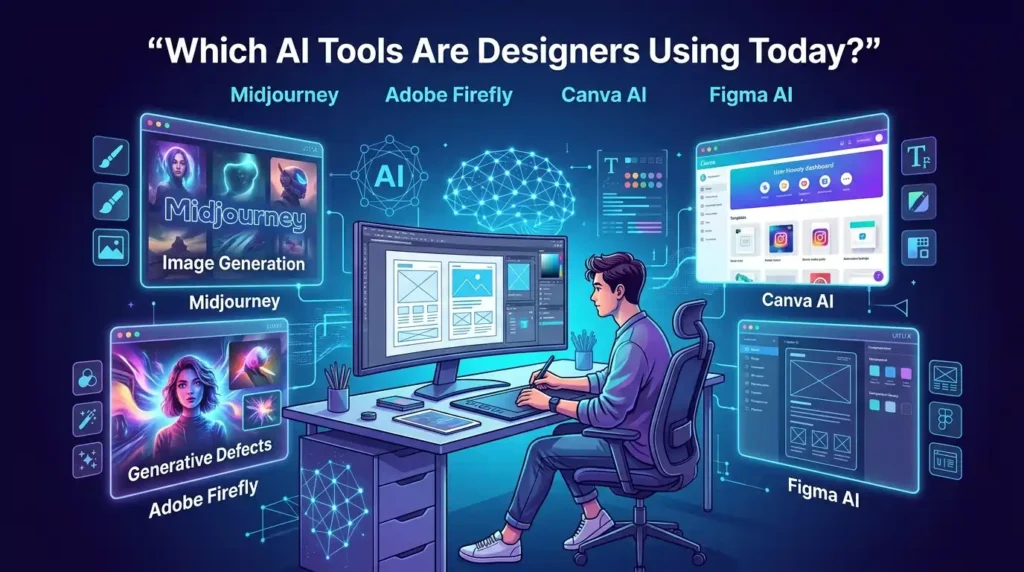
Some of the most popular AI-powered design tools include:
Midjourney – Known for generating high-quality AI artwork and concept images.
Adobe Firefly – Integrated with Adobe products, this tool helps create generative visuals and design elements.
Canva AI – Offers automated design suggestions, text-to-image generation, and smart templates.
Figma AI features – Used in UI/UX design for layout suggestions and design automation.
These tools demonstrate how AI Design Technology can enhance the creative process. However, the best designers use these tools thoughtfully. Instead of relying completely on AI, they combine AI suggestions with their own creative judgment.
Also Read – UCEED Part A And Part B: How Coaching Balances Both
Will AI Replace Designers or Create New Opportunities?
One of the most common questions in the creative industry is: Will AI replace graphic designers?
The short answer is no. While AI can automate certain tasks, it cannot replace human creativity, emotional understanding, and storytelling ability.
Design is not only about producing visuals. It also involves:
- understanding user needs
- creating meaningful experiences
- communicating ideas visually
- building strong brand identities
AI lacks the human perspective required for these tasks. Instead of replacing designers, AI is creating new opportunities. Designers who learn how to work with AI tools can become more efficient and innovative.
Where Can Designers Use AI in Real Work?
AI is useful in many parts of the real design process. It can help during:
- idea exploration
- moodboarding
- content drafting
- image generation
- quick variations
- layout suggestions
- prototyping support
- asset adaptation
- workflow automation
This is why many designers now treat AI as a creative assistant. It helps them move faster through the repetitive or uncertain parts of the process.
The future of design will likely involve collaboration between human creativity and AI technology.
What Skills Do Designers Need in the AI Era?
As AI becomes more common in design workflows, designers need to develop new skills to stay competitive.
Some important skills designers need in the AI era include:
Creative thinking
Even with AI tools, original ideas remain essential.
AI tool knowledge
Understanding how to use AI design software effectively can improve productivity.
Prompt creation
Learning how to guide AI tools through prompts helps generate better results.
UX and user research
Human-centered design will remain important as technology evolves.
Critical thinking
Designers must evaluate AI-generated results and refine them creatively.
Developing these skills ensures that designers remain valuable in the future of graphic design jobs.
Where Are the New Career Opportunities in AI Design?
AI technology is also creating entirely new career paths within the design industry.
Some emerging AI design jobs include:
AI design specialist
Designers who specialize in working with AI tools and generative systems.
Prompt designer
Professionals who create prompts that guide AI tools to produce desired creative results.
AI UX designer
Designers who focus on improving user experiences within AI-powered products.
Creative technologist
Experts who combine design skills with technology and coding.
These roles demonstrate that the Future of Design Careers is expanding rather than shrinking.
Who Should Learn AI Design Tools Today?
AI design tools are useful for a wide range of creative professionals.
Students studying design should start exploring AI tools early. Learning how to integrate technology with creativity can improve career opportunities.
Graphic designers can use AI to improve productivity and generate new ideas.
UI and UX designers can use AI insights to better understand user behavior and improve digital experiences.
Even marketing professionals benefit from AI-assisted Design Workflows when creating visual content for campaigns.
Anyone involved in creative work can benefit from learning how AI in Design Careers is shaping the future.
When Should Designers Start Learning AI Tools?
Many professionals wonder when designers should begin learning AI tools. The best time is now.
Technology is evolving rapidly, and early adopters often gain significant advantages in their careers. Designers who start experimenting with AI tools today can develop valuable experience before these tools become standard industry practice.
Learning AI does not mean abandoning traditional design skills. Instead, it means expanding your toolkit and adapting to modern workflows.
Designers who combine creative expertise with AI knowledge will be better prepared for the future.
Is Graphic Design Still a Good Career in the Age of AI?
Despite rapid technological changes, graphic design remains a valuable and growing career.
Businesses need designers to create brand identities, digital experiences, marketing materials, and visual storytelling.
AI tools may change how designers work, but they do not eliminate the need for creativity and strategic thinking.
In fact, designers who understand both creativity and technology may find even more opportunities in the Future of Graphic Design with AI.
Companies increasingly look for designers who can use modern tools effectively while maintaining strong creative vision.
Did You Know? Interesting Facts About AI in the Design Industry
Did you know that AI can generate thousands of design variations in seconds?
Many companies now use AI Generated Designs to test different visual concepts before selecting the best option. Another interesting fact is that AI tools can analyze user data and suggest design improvements that increase engagement.
For example, AI may recommend different colors or layouts based on how users interact with a website.
These capabilities demonstrate how AI Design Trends are influencing the creative industry. However, successful design still depends on human insight and creativity.
How Designers Can Use AI Without Losing Creativity
Some designers worry that relying on AI tools may reduce originality. However, when used thoughtfully, AI can actually enhance creativity.
The key is to treat AI as a collaborative assistant rather than a replacement.
Designers can use AI to generate initial ideas, explore different visual directions, or automate repetitive tasks. After that, human creativity refines and improves the final result.
For example, a designer may generate several concept images using AI and then combine elements from different versions to create a unique final design.
This approach maintains originality while benefiting from the efficiency of AI creativity tools.
Start Your Design Career with the Right Guidance
Artificial intelligence is changing the design industry, but one thing remains constant – strong design fundamentals and creative thinking are still the foundation of a successful career. If you are a student who wants to build a future in graphic design, UI/UX, or creative technology, learning the right skills at the right time is extremely important.
At Design Aspirants, our Design Entrance Preparation Course is created to help students develop strong creative thinking, problem-solving abilities, and design skills needed for top design institutes like NID, NIFT, UCEED, and CEED.
Through expert mentorship, structured learning, and practical design exercises, students can understand both traditional design principles and modern tools shaping the future of design careers.
Whether you are just starting your journey or preparing for design entrance exams, the right guidance can make a huge difference.
Conclusion: The Future of Design Careers in the AI Era
Artificial intelligence is transforming the design industry in many ways. From faster workflows to new creative possibilities, AI tools are changing how designers work and collaborate.
However, the future of design careers will not be defined by technology alone. Human creativity, critical thinking, and storytelling remain essential elements of great design.
Designers who embrace AI in Design Careers and learn how to work alongside new technologies will discover exciting opportunities in the evolving creative landscape.
Rather than fearing AI, designers should view it as a powerful tool that expands creative potential and opens new career paths.
Frequently Asked Questions
How is AI changing the design industry?
AI is changing the design industry by automating repetitive tasks, generating design variations, and helping designers work more efficiently.
What AI tools should designers learn?
Popular tools include Midjourney, Adobe Firefly, Canva AI, and Figma AI features.
Can AI replace graphic designers completely?
No. AI can assist with design tasks but cannot replace human creativity, strategic thinking, and emotional storytelling.
Is learning AI important for future design careers?
Yes. Designers who understand AI tools will have more opportunities and will adapt more easily to changing industry demands.
How can designers stay competitive in the AI era?
Designers should continue developing creative skills while learning how to use modern AI design tools effectively.